
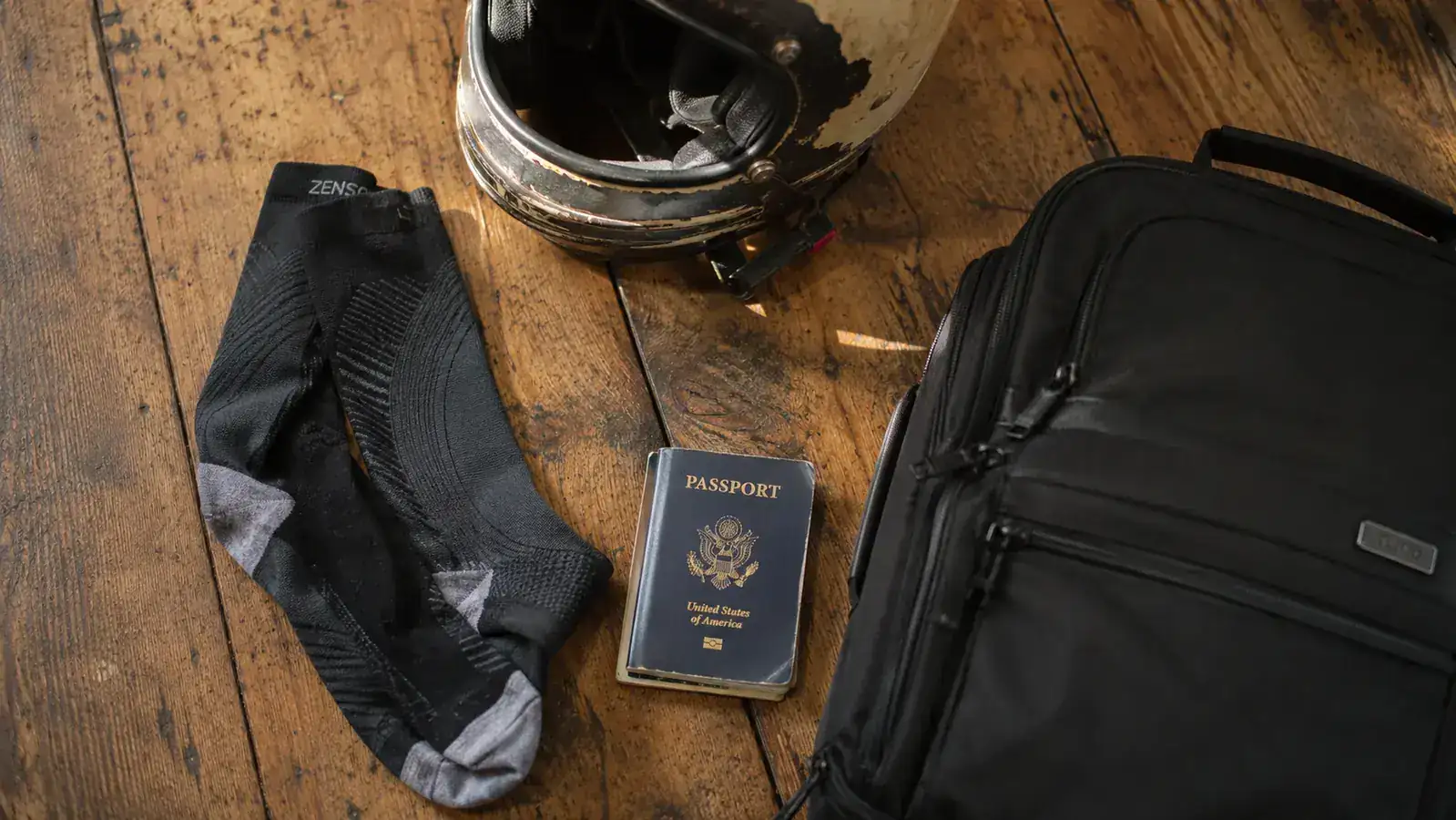
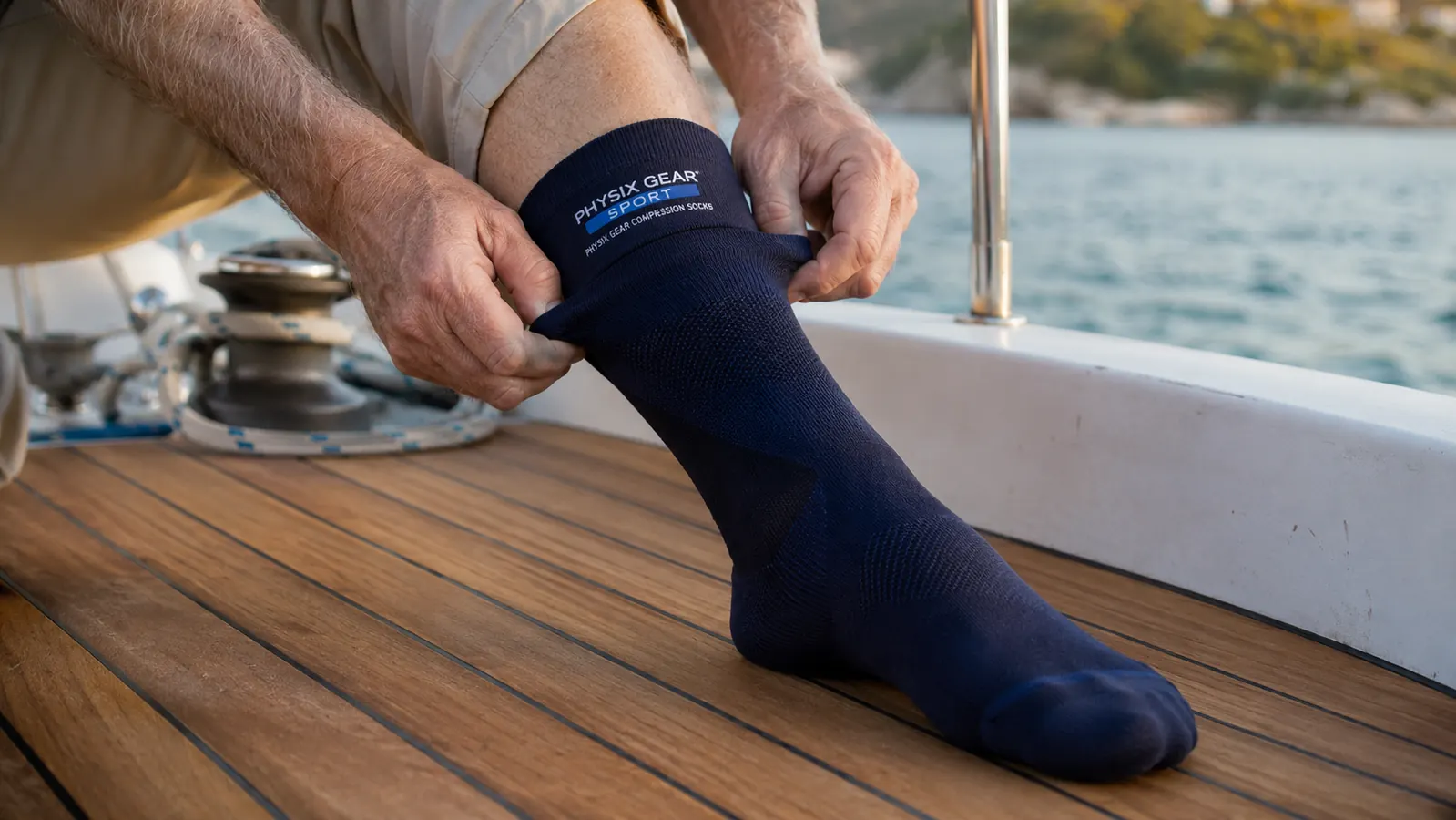
I want to talk about something most compression sock reviews skip entirely: the moment three weeks into ownership when you stand in a boat head at 6 a.m., trying to wrestle a sock past your heel, and you realize the size chart you trusted was written by someone who has never had wide feet in their life. That is where the honest product story begins. The Physix Gear Sport compression socks have nearly 95,000 reviews on Amazon and a 4.5-star rating. That number is real. So is the fact that a meaningful slice of those reviews mention sizing confusion, and the company's response is essentially to tell you to read the chart more carefully. I have been wearing these socks across long-haul flights, two-lane highways on a BMW R1250GS, and the cramped quarters of a 38-foot ketch anchored off the coast of the Carolinas. Here is what I actually found.
This is not going to be the review that tells you compression socks are a miracle. They are not. What they are is a practical tool that works when you size them right, use them consistently, and understand what they can and cannot do. If you are shopping for Physix Gear compression socks and you want the truth before you hand over your money, read the rest of this.
The Quick Verdict
Solid graduated compression at a price that makes sense, but the sizing runs small on wide feet and the color options are meaningless if you get the wrong fit.
Amazon Check Today's Price →Sized right, these are the best budget compression socks I have found for travel.
Check today's price and read the sizing chart carefully before you order. Medium covers most men's shoe sizes 7-10 with a calf up to 15.5 inches. If you are borderline, go up.
Amazon Check Today's Price on Amazon →What the Marketing Photos Leave Out
Every compression sock product page looks the same. There is a diagram of a leg with a gradient arrow showing 20-30 mmHg pressure at the ankle tapering to something gentler at the calf. There is a list of activities: nurses, runners, pregnant women, travelers. What there is not is an honest picture of what the sock actually feels like on a wide foot, or what the toe box does to your pinky toe on a six-hour layover in a hard airport seat.
Here is what I noticed that the photos skip. The weave at the toe box is noticeably tighter than the rest of the sock. On my right foot, which runs slightly wider than my left, that creates a compression point across the fourth and fifth toes on flights longer than four hours. It is not painful. It is distracting. If you have wide feet or a wide toe box, this is the thing to know before you buy. It does not show up in the star ratings because most reviewers either do not notice it or do not connect it to the sock design.
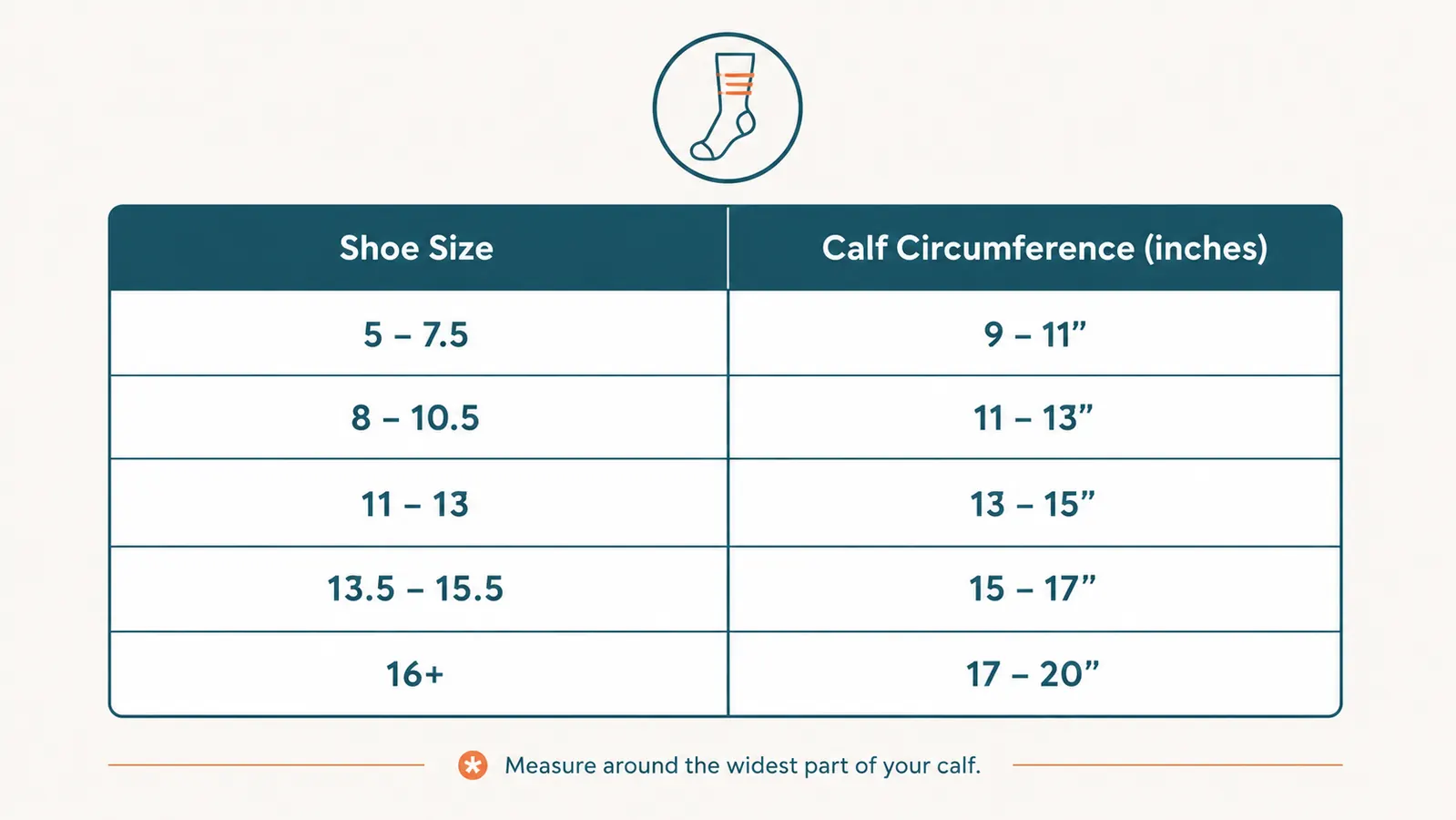
The other thing the photos do not tell you is that the gradient compression is only as good as your fit. A sock that is too loose at the ankle delivers none of the circulatory benefit the product promises. A sock that is too tight at the calf cuts off the return flow. Physix Gear gives you a size chart based on shoe size and calf circumference. The chart is accurate. The problem is that people ignore it, order based on shoe size alone, and then wonder why the socks feel wrong. I measured both before ordering and still found myself on the edge between Medium and Large.
The Sizing Trap: How to Avoid the Most Common Mistake
Physix Gear sells these in Small/Medium and Medium/Large for men and a separate size scale for women. That two-size-per-SKU structure is common in the category and it works fine if you fall cleanly in the middle of a range. If you are at the outer edge of either measurement, which I am on calf circumference at 16.5 inches, you are going to be choosing between a sock that grips hard and a sock that slips. I went with Large and found the ankle tension exactly where I needed it, though the calf band sits lower than I expected.
My practical advice: measure your calf at its widest point, not where you think it is. Most people underestimate their calf circumference by an inch or more. If your calf is over 15 inches, order Large without hesitation. If you are a men's shoe size 12 or above, the length runs short enough that you will feel it at the heel. In that case, size up and accept that the ankle zone will be slightly looser, then add a walking warm-up at each stop to compensate.
How They Actually Perform on a Motorcycle
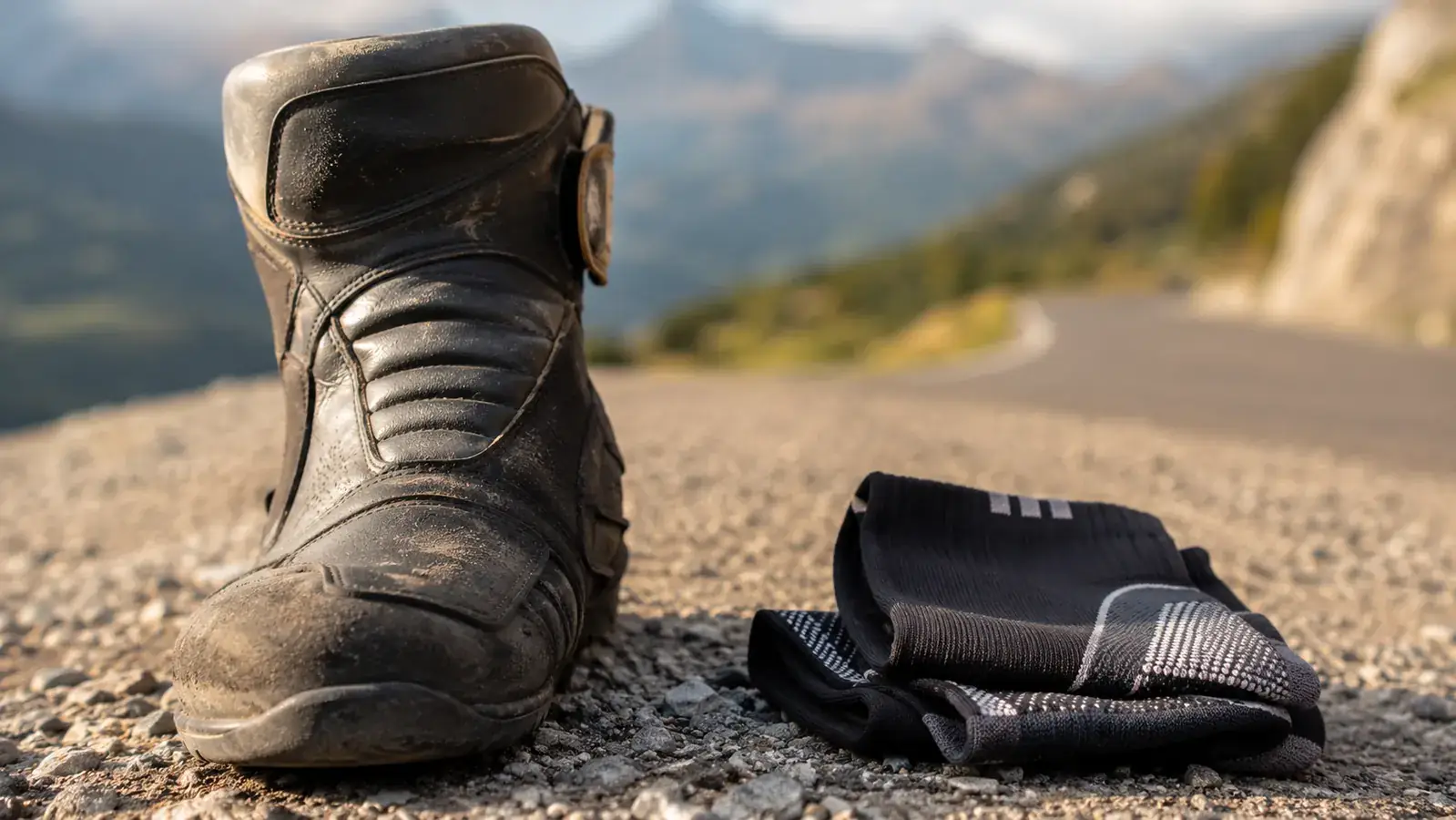
This is the angle nobody covers, probably because the overlap between compression sock buyers and long-distance motorcycle riders is small. But it is the use case that taught me the most about these socks. I wore Physix Gear compression socks for a nine-day run from New Mexico up through Colorado and into Utah last September. Full days in the saddle, seven to nine hours of riding, temperatures ranging from 48 degrees at altitude to 87 in the canyon country.
The socks performed better than I expected on the bike. The foot peg vibration that usually leaves my Achilles stiff by early afternoon was noticeably less severe. That is not a compression sock marketing claim, that is just physics: the graduated squeeze keeps more blood moving through the lower leg instead of pooling near the ankle under static load. At the end of day three, when I pulled off my boots at a motel in Durango, my ankles looked normal. On previous long rides without compression, they looked like I had been wading.
The honest downside on the bike: heat retention. Motorcycle boots are already warm. The nylon-spandex blend in these socks traps more heat than a wool or cotton-blend sock. Above 80 degrees, my feet ran noticeably warmer than usual. If you are riding in hot climates, build in more frequent stops to let your feet breathe. Cold climates, these are excellent. Hot and humid, they are a tradeoff.
At the end of day three, when I pulled off my boots in Durango, my ankles looked normal. On previous long rides without compression, they looked like I had been wading.
Durability: The Wash Test Over Four Months
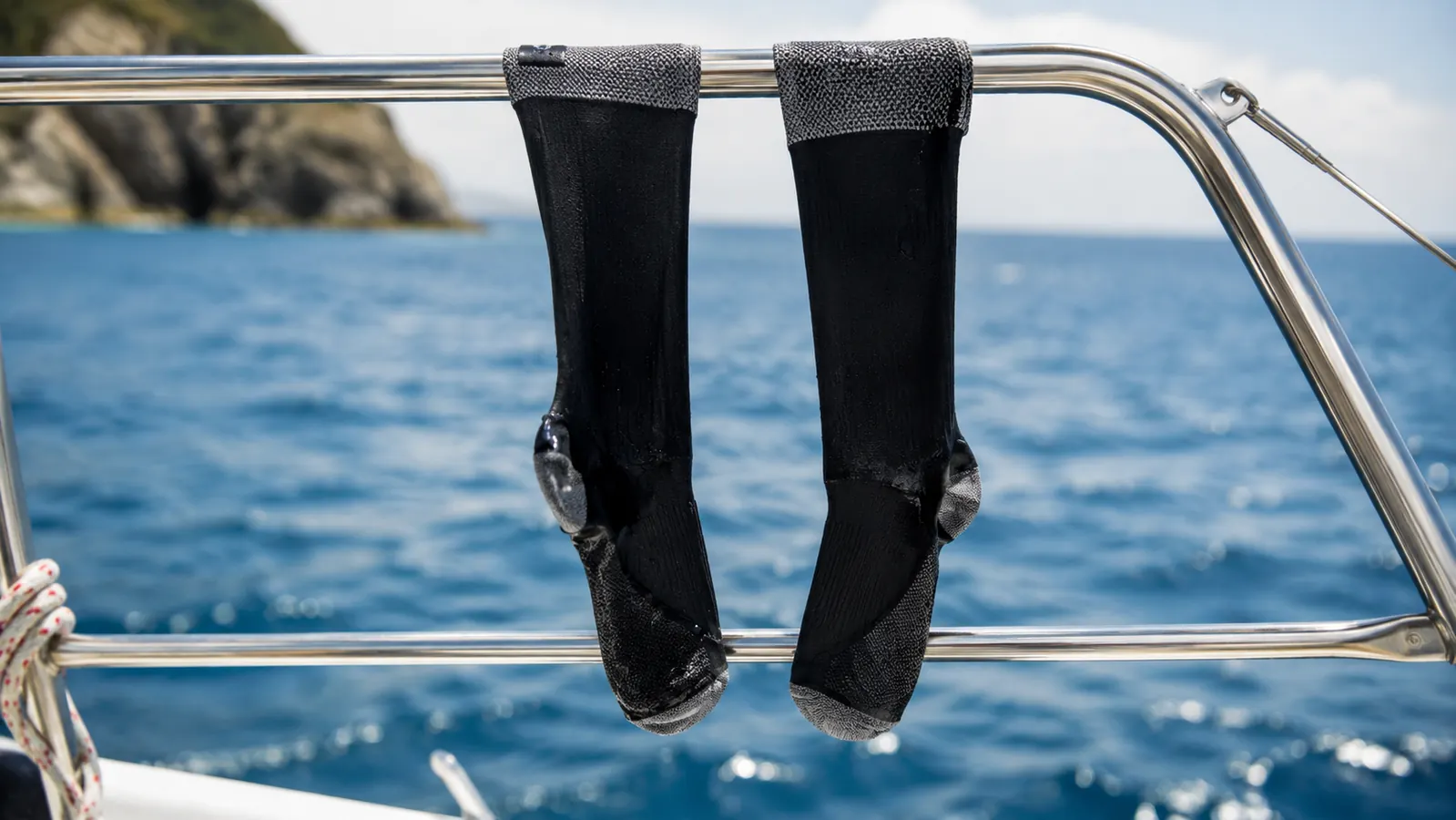
Living aboard a boat means I do laundry differently than most people. I use a compact portable washer with cold water and a short cycle, because that is what fits in the forward berth. Compression socks are notoriously sensitive to heat, and most brands tell you to air dry. I air-dried these every time, hanging them from the stainless steel lifeline at the stern. After four months of regular use and washing, here is what I found.
The elastic in the ankle band shows the most wear. By month three, the left sock had lost perhaps 10 percent of its ankle tension compared to when it was new. The right sock held up slightly better, which I attribute to nothing scientific, just variation in the knit batch. The calf band retained its tension well through all four months. The weave did not pill noticeably, which impressed me given the nylon content and frequent washing. At the current rate of wear, I would expect these to remain functional for six to eight months of regular travel use before the ankle compression drops below what I consider useful.
For context, a pair of CEP compression socks at three times the price lasted me about 14 months under the same conditions. The Physix Gear socks cost roughly one-third as much. The math on value works out reasonably well, especially since you can buy a three-pack and rotate pairs to extend the life of each one.
What the Five-Star Reviews Are Not Telling You
With nearly 95,000 reviews and a 4.5-star average, the crowd is clearly saying these socks work. But crowds are not great at surfacing the things that will matter to you specifically. Here is what I pulled from the lower-rated reviews that deserves honest attention.
First, the toe seam. Physix Gear uses a standard linked toe closure, not a hand-linked or seamless toe. For most people this is not an issue. For anyone with sensitive feet, a hammertoe, or a tendency toward blisters on the dorsal surface of the toes, the seam sits in exactly the wrong place on the longest toe. I do not have this problem personally, but the pattern in the one-and-two-star reviews is consistent enough that I believe it.
Second, the color descriptions on Amazon do not always match what arrives. I ordered Black and got black. I ordered Navy and got something closer to dark charcoal. That matters if you are trying to match a professional wardrobe for business travel. It does not matter if, like me, you are usually wearing them under pants on a plane.
Third, and this is the one I find most useful: the 20-30 mmHg compression level is labeled as medical-grade on the packaging. That is accurate for the rating class, but it does not mean these are appropriate for anyone with a diagnosed circulation condition. If you have peripheral artery disease, diabetes with neuropathy, or a wound on your lower leg, talk to a doctor before wearing any compression sock, including these. Physix Gear puts this disclaimer in small print. I am putting it in plain English because I have seen people use 20-30 mmHg socks incorrectly and it caused problems.
What I Liked
- Genuine 20-30 mmHg graduated compression at a price that makes the category accessible
- Holds tension at the calf band well through months of regular washing
- Works as well on a motorcycle or boat as it does on a plane
- Wide color selection, though some shades run darker than listed
- Three-pack option lets you rotate pairs and extend overall lifespan
- Sizing chart is accurate when you actually follow it
Where It Falls Short
- Toe box runs tight for wide feet, creates a pressure point on longer wear
- Ankle band loses tension noticeably by month three under frequent washing
- Heat retention makes these uncomfortable in warm climates or hot boots
- Standard linked toe seam is a problem for anyone with toe sensitivity or blisters
- Two-size-per-SKU structure puts borderline buyers in a guessing situation
- Not appropriate for diagnosed circulation conditions without medical clearance
How These Compare to What I Wore Before
Before I landed on Physix Gear, I cycled through three other brands over about two years. I tried a budget pair from a warehouse store that had no graduated compression at all, just uniform squeeze from ankle to knee. Felt like wearing a rubber band on each leg. I tried a mid-range brand that marketed itself heavily to nurses and had a great calf band but a toe box so stiff it caused a blister on day one. And I tried a premium German-made brand that was excellent in every technical respect but cost four times as much and required hand washing, which is not practical when you are living out of a 26-liter dry bag on a boat.
Physix Gear sits in a practical middle ground. The compression is real, the price is reasonable, the durability is honest rather than exceptional. For travelers who want the circulatory support without paying a premium price or babying their gear, these are the right answer. For athletes doing serious competition recovery or anyone with a medical need for precise compression, spend more and get something with medical certification. If you want a side-by-side comparison of Physix Gear against a direct competitor at a similar price, the Physix Gear vs CHARMKING comparison lays out the specific differences.
Who This Is For
These socks are the right buy if you are a traveler who takes flights long enough to feel it in your ankles, does not want to spend premium prices on gear that gets washed in hotel sinks, and has normal or narrow feet. They are also a good fit for motorcyclists who spend long days in boots and want something that reduces end-of-day ankle swelling without adding bulk. If you are in the 35-65 age range and your circulation is not what it was at 25, the support is real and the benefit is noticeable. For a closer look at how to prevent ankle swelling and what else supports circulation on long flights, the guide on how to prevent swollen feet on long flights covers the full picture beyond just socks.
Who Should Skip It
If you have wide feet with a wide toe box, these are going to frustrate you. The toe band compression is too tight for that foot shape and there is nothing you can do to adjust it. If you ride in hot climates and cannot afford sweaty feet inside your boots, the heat retention will outweigh the benefits. If you have any diagnosed vascular or circulatory condition, do not self-prescribe 20-30 mmHg compression. See a doctor and get a recommendation specific to your situation. And if you are a size 13 shoe or larger, the sock length may run short enough to affect your experience at the heel.
If your feet swell on long flights or long days in the saddle, these are worth trying at the current price.
Measure your calf before ordering. If you are borderline between sizes, go up. Buy the three-pack and rotate pairs to extend the life of each one.
Amazon Check Today's Price on Amazon →